
Investing can be approached in different ways depending on your financial goals, time frame, and willingness to accept risk.
Two common approaches are long-term investing and short-term investing. While both involve putting money into investments with the goal of earning a return, they differ significantly in how investors make decisions and manage their money.
Understanding long-term investing vs short-term investing can help beginners choose an approach that better fits their financial goals.
What Is Long-Term Investing?
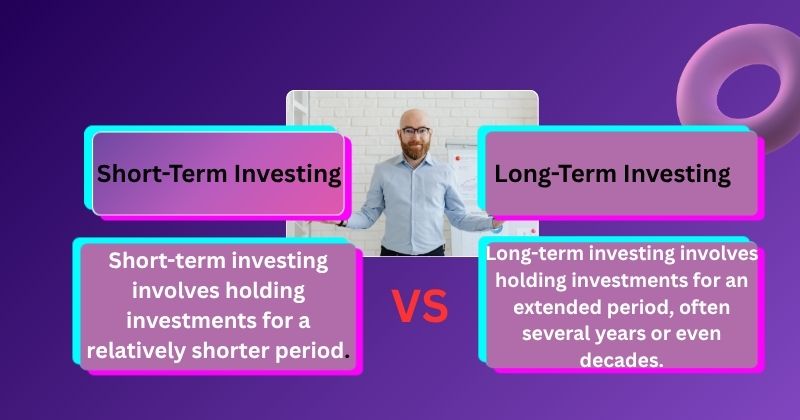
Long-term investing involves holding investments for an extended period, often several years or even decades.
The main goal is usually to benefit from long-term growth rather than short-term price movements.
Long-term investors may focus on:
- Business growth
- Long-term market performance
- Compounding returns
- Portfolio diversification
- Consistent investing
Instead of trying to predict what prices will do tomorrow, long-term investors generally focus on the future.
What Is Short-Term Investing?
Short-term investing involves holding investments for a relatively shorter period.
The time frame can vary from several days or weeks to a few months or a few years, depending on the strategy.
Short-term investors may pay closer attention to:
- Market movements
- Economic news
- Company announcements
- Price trends
- Market sentiment
Because prices can change quickly, short-term investing can require more frequent monitoring.
Long-Term Investing vs Short-Term Investing
The biggest difference between the two approaches is the amount of time an investor expects to hold an investment.
Investment Time Frame
Long-term investors may hold investments for many years.
Short-term investors generally expect to buy and sell investments sooner.
Investment Strategy
Long-term investing often focuses on growth over time.
Short-term investing may focus more on taking advantage of price movements.
Market Attention
Long-term investors may not need to monitor market prices every day.
Short-term investors often need to pay closer attention to market developments.
Risk
Both approaches involve risk, but short-term investing can expose investors to greater short-term price volatility.
Long-term investors may have more time to recover from temporary market declines, although long-term investing does not eliminate the possibility of losing money.
Benefits of Long-Term Investing
Long-term investing has several potential advantages.
Compounding
When investment returns are reinvested, they can generate additional returns over time.
This process is known as compounding and can become increasingly powerful over long periods.
Less Focus on Daily Market Movements
Long-term investors may be less concerned about temporary price changes.
Short-term declines may have less importance when an investor has a long time horizon.
Potential for Long-Term Growth
Businesses and economies can grow over long periods, which may create opportunities for long-term investors.
However, past performance does not guarantee future results.
Benefits of Short-Term Investing
Short-term investing can also have potential advantages.
More Frequent Opportunities
Short-term strategies may allow investors to take advantage of temporary market movements.
Flexibility
Investors can adjust their positions more frequently as market conditions change.
Potential for Faster Results
Short-term investments may produce gains or losses over relatively short periods.
However, faster potential results also come with significant risks.
Risks of Long-Term Investing
Long-term investing is not risk-free.
Possible risks include:
- Market declines
- Economic downturns
- Poor company performance
- Inflation
- Changes in investment conditions
Investors must still carefully choose investments and manage risk.
Risks of Short-Term Investing
Short-term investing can involve additional challenges.
These may include:
- Greater price volatility
- Frequent trading decisions
- Higher transaction costs
- Emotional decision-making
- Difficulty predicting market movements
Trying to make consistent profits from short-term price changes can be difficult.
Which Approach Is Better for Beginners?
There is no single approach that is best for every investor.
For many beginners, long-term investing can be easier to manage because it allows more time for investments to potentially grow and reduces the need to react to daily market movements.
However, the right approach depends on your financial goals, investment time frame, risk tolerance, and knowledge.
Can You Combine Long-Term and Short-Term Investing?
Some investors use both approaches.
For example, an investor may have a long-term portfolio while also allocating a smaller portion of their money to shorter-term opportunities.
However, combining strategies requires discipline and a clear understanding of the risks involved.
How to Choose Between Long-Term and Short-Term Investing
Before choosing an approach, consider:
Your Financial Goals
Think about what you are investing for and when you expect to need the money.
Your Time Horizon
Determine how long you can leave your money invested.
Your Risk Tolerance
Consider how comfortable you are with temporary losses and market fluctuations.
Your Knowledge and Experience
Short-term strategies can require more active decision-making and market knowledge.
Your Available Time
Consider how much time you can realistically spend researching and monitoring investments.
Common Mistakes Investors Should Avoid
Regardless of your strategy, avoid making investment decisions based entirely on emotions.
Common mistakes include:
- Chasing quick profits
- Selling because of temporary market declines
- Following market trends without research
- Investing money you cannot afford to lose
- Changing strategies too frequently
A clear plan can help investors remain disciplined.
Final Thoughts on Long-Term Investing vs Short-Term Investing
Understanding long-term investing vs short-term investing is important for anyone beginning their investment journey.
Long-term investing generally focuses on gradual growth over an extended period, while short-term investing focuses more heavily on shorter-term market movements.
Neither approach guarantees profits. The most suitable strategy depends on your goals, time horizon, risk tolerance, and ability to manage the investment.
For beginners, developing a clear strategy and understanding the risks involved can be more important than trying to predict the market.